


BLOGPOSTS
Digital twins: beyond the hype and towards realising tangible benefits
By Dr. David Stewart, Engineering Director at HSSMI.
Digital twins have been discussed in manufacturing circles for over a decade, yet for many organisations they remain stuck somewhere between buzzword and side project. The hype cycle has created both excitement and scepticism. As engineering leaders, it is our responsibility to cut through the noise and focus on what a digital twin actually is, how it can be deployed and how it can add value in practical terms. This understanding has been built up from 13 years of development and collaboration with technology providers and the manufacturing community. In this brief thought-piece, we share: our take on what a digital twin is, what tangible benefits it can create, and some examples of projects we are delivering to improve development and adoption.
What is a digital twin – really?
A true digital twin is not simply a 3D model or a simulation. At its core, a digital twin is a digital representation of a physical asset, process, or facility that maintains a live or near real-time connection to its physical counterpart. That connectivity is what distinguishes a twin from a static digital model.
However, it’s important to recognise that digital twins are not binary — you don’t suddenly “have one” or “not have one.” Instead, they are built in layers that mature over time. A realistic journey often includes:
-
- Factory capture and scan – creating an accurate digital baseline of the existing facility using laser scanning or photogrammetry.
- 2D layout modelling – structured representations of assets, flows and spatial constraints.
- 3D spatial models – immersive visualisation of the environment for planning and understanding potential clashes.
- Process simulation – modelling material flow, throughput and constraints to test scenarios.
- Virtual commissioning – validating control logic and automation strategies before physical deployment.
- IoT-enabled integrated live twin – a continuously updated digital model fed by live shopfloor data, capable of monitoring performance, predicting outcomes and supporting real-time decision-making.
This approach is illustrated in the figure below. Each layer adds value independently. A full live digital twin is the culmination of these capabilities, but meaningful returns can be realised at every stage of the journey.
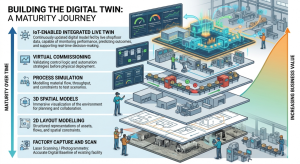
Figure 1: The digital twin development journey
But what are the Tangible benefits?
For a manufacturing director, investment decisions are judged on operational impact, risk reduction and financial return. A digital twin must therefore be justified in practical terms. We’ve outlined 5 key areas where they can make a tangible difference.
-
- De-risking capital investment
Before a new line, layout change or automation upgrade is installed, a process simulation model can test throughput, bottlenecks and failure modes. This reduces commissioning surprises and shortens ramp-up time. When combined with virtual commissioning, controls and sequencing can be validated before hardware is energised, cutting downtime and integration risk.
The tangible benefit: faster time to production, fewer costly reworks, and more predictable ROI on capital projects.
-
- Throughput and efficiency optimisation
A live digital twin connected to shopfloor data provides continuous visibility of performance against a simulated ideal. It enables scenario testing without disrupting production: What happens if we change batch size? Add a shift? Rebalance stations?
Instead of reactive firefighting, operations teams gain a proactive optimisation tool. Small percentage improvements in OEE, when sustained across a plant, translate into significant annual gains.
The tangible benefit: faster problem solving and decision making when faced with issues, measurable productivity increases without additional physical assets.
-
- Predictive maintenance and asset longevity
When machine behaviour is mirrored in a digital twin, deviations from normal operating patterns can be detected early. This allows maintenance to move from calendar-based schedules to condition-based interventions.
The tangible benefit: fewer unplanned stoppages, reduced risk of catastrophic failure and equipment downtime.
-
- Workforce enablement and training
3D spatial twins and immersive simulations provide safe environments for training operators and maintenance teams. New processes can be rehearsed virtually. Complex changeovers can be visualised before execution.
The tangible benefit: faster onboarding, fewer human errors, and a more confident workforce.
-
- Strategic decision support
At the enterprise level, a fully integrated twin becomes a decision engine. It allows leadership teams to test strategic scenarios — product mix changes, demand fluctuations, supply disruptions — against a realistic operational model.
The tangible benefit: data-driven planning that reduces strategic risk.
So what are HSSMI doing to support?
HSSMI has been involved in developing and deploying various Digital twin ‘layers’ with the manufacturing community since our inception in 2013. However, it is only in the past 2 years that we have seen a step change in advances in GPU processing, cloud infrastructure and interoperable digital tools to unlock the required processing power to allow complex simulations and large-scale spatial models to run in near real-time.
Supported by the Department for Business and Trade (DBT), Innovate UK and the Advanced Propulsion Centre (APC), we are applying these innovations on exciting new electric vehicle technologies and in expanding UK production capacity:
Project E-steel | Ford motor Company – HSSMI are delivering various digital models to support the development and industrialisation of an e-sheet stamping and lamination pilot facility for Electric Drive Units (EDU) for Ford in the UK. We have created a Digital environment and supporting models that enable concurrent engineering of the product, process, tooling and scale up plan, whilst allowing the partners to test production scenarios that will help Ford make important decisions on future integration.
ZETTA Project | Leyland DAF Trucks – HSSMI has been supporting Leyland trucks to incorporate major factory upgrades to their Preston truck production facility to enable Battery Electric variants (BEV) of their trucks to be manufactured down the same line as the current ICE based trucks. We scanned their facility to generate a rich point cloud, translated this into a 3D model of their production lines, integrated the planned changes in the virtual model, generated simulations and established a connection between live data from the shopfloor and the models using Nvidia Omniverse. These have proved crucial in enabling proposed production line changes to be tested, and gives Leyland a digital foundation for modelling future changes as they scale up production of BEV trucks.
Summary
The key message for manufacturing leaders is this: digital twins are not a futuristic luxury. They are a structured pathway to better decisions, lower risk and higher performance. The organisations that realise tangible benefits are not those chasing perfection from day one, but those that start with clear operational problems, build capability layer by layer, and treat the twin as a living asset.
The hype is fading; the opportunity is real. The question is no longer whether digital twins will shape manufacturing; it is how quickly we choose to harness them.
If you’d like to learn more about our work or if you’re looking for support on building a digital twin for your facility, please connect with me on LinkedIn, or message me at david.stewart@hssmi.com




CONTACT US
Contact us today for a short initial conversation on how HSSMI can help your organisation achieve its strategic goals.
